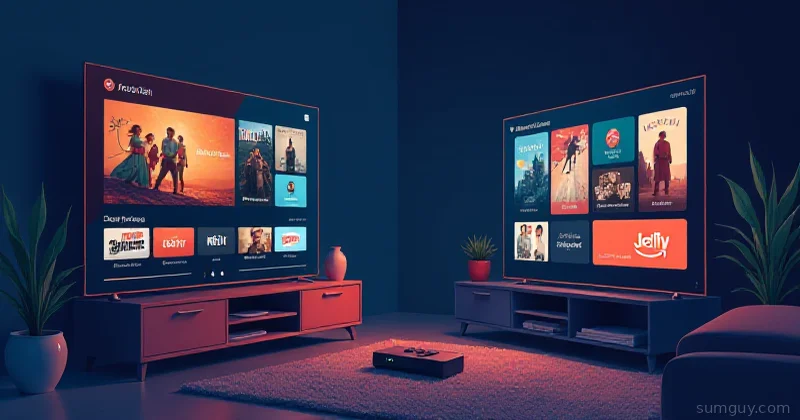

The Once-Golden King Now Behind a Paywall
Remember when Plex was the obvious choice for self-hosted media? You’d toss your movies and shows into a folder, fire up the server, and boom: instant Netflix replacement. It was slick, it worked everywhere, and you owned it. That was 2010-ish.
Now it’s 2026, and Plex has… evolved. Remote access needs Plex Pass. Hardware transcoding needs Plex Pass. Live TV worth watching needs Plex Pass. At some point, you’re not really self-hosting anymore. You’re renting the privilege of storing your own files. That’s when a lot of people start muttering about forks.
Enter Jellyfin. A fully open-source media server born from Emby (which went commercial), maintained by volunteers, no account required, no “free tier with limitations.” Just you, your files, and a server that doesn’t phone home.
Jellyfin has caught up. Not just in features but in polish and stability. If you’re starting fresh in 2026, this is actually a real choice now.
Plex: Still Slick, Now With Friction
Let’s be fair: Plex is genuinely good software. The UI is polished. The mobile apps are butter-smooth. Remote access works reliably (their relay infrastructure is actually impressive). If you already own a Plex Pass, the platform is worth keeping.
Strengths:
- UI/UX is genuinely beautiful on every client
- Mobile apps (iOS, Android) are top-tier
- Plex Pass features: hardware transcoding, live TV, Plex Sync (offline downloads)
- Works flawlessly across platforms
- Built-in community features and “Watch Together”
The Friction:
- Account required to use your own server
- Free tier is neutered: as of April 2025 remote playback isn’t free at all (needs Plex Pass or the $2.99/month Remote Watch Pass), no hardware transcoding, features get paywalled without warning
- Plex Pass: $69.99/year or $6.99/month (and lifetime jumps to $749.99 in July 2026). That’s not free anymore
- Telemetry: Plex sends data home. Not malicious, but it’s there
- They keep moving the goalposts: features you got for free three years ago are now Plex Pass only
Jellyfin: Free Forever, No Account Required
Jellyfin started as a fork of Emby after Emby went commercial. The goal: keep media servers actually free. Open source. Community-driven. No VC pressure to monetize.
Strengths:
- Completely free, no account required
- Open source (GPLv2)you can audit it, fork it, self-host the whole thing
- Hardware transcoding is built-in, free
- No telemetry (actually inspectable code to verify this)
- Active development, regular updates
- Live TV and DVR support, equivalent to Plex
- Can self-host authentication (LDAP, OAuth, etc.)
Where It Trails:
- Native mobile apps are decent but not as polished as Plex (though options exist: Infuse, Jellyfin for Android)
- Relay/remote access requires more setup (Tailscale, reverse proxy with auth)
- TV interfaces exist but aren’t as refined (though getting better)
- Smaller community = fewer third-party integrations
The weird part? Most of these gaps are closing. Jellyfin’s web UI is genuinely nice now. The Android app is totally usable. And honestly, if you’re comfortable with Tailscale (which you should be), remote access is actually simpler than Plex’s relay nonsense.
Hardware Transcoding: Where the Money Actually Matters
This is where Plex’s Plex Pass paywall stings. Transcoding is CPU-intensive. Hardware transcoding (using your GPU or CPU’s encoder) keeps things smooth, especially if you’re serving multiple streams or have older hardware.
Plex: Hardware transcoding requires Plex Pass ($6.99/month).
Jellyfin: Hardware transcoding is built in, free.
If you’re running a Docker Compose setup with GPU passthrough, both work identically, but only Jellyfin lets you do it without paying.
version: '3.8'services: jellyfin: image: jellyfin/jellyfin:latest container_name: jellyfin ports: - "8096:8096" volumes: - ./config:/config - ./cache:/cache - /mnt/media:/media:ro environment: - JELLYFIN_PublishedServerUrl=http://192.168.1.100:8096 devices: - /dev/dri/card0:/dev/dri/card0 # Intel iGPU - /dev/dri/renderD128:/dev/dri/renderD128 restart: unless-stoppedFor Plex, the Compose is identical except you need Plex Pass for it to actually use the GPU. (Yes, Plex lets you pass the GPU, but the feature is gated.)
Remote Access: Plex Relay vs. Jellyfin + Tailscale
Plex has a built-in relay system. Set it up once, remote access works everywhere. Dead simple.
Jellyfin doesn’t have relay, so you either:
- Tailscale: Install the VPN on every device, connect to your server’s Tailscale IP. Works perfectly, fully encrypted, zero port-forwarding.
- Reverse proxy: Nginx/Caddy in front of Jellyfin with OIDC auth. More setup, but WAY more flexible.
Honestly? Tailscale is becoming the baseline. If you’ve got a self-hosted server, you should already be running Tailscale for everything. Jellyfin + Tailscale is cleaner than Plex’s relay.
Live TV and DVR
Both support it. Both work. Jellyfin’s setup is slightly more fiddly (M3U playlists, XMLTV guide data), but once it’s running, it’s identical. Plex Pass required for Plex. Jellyfin: free.
Client Apps: The One Place Plex Still Wins
Plex has native apps for literally everything. iOS, Android, Apple TV, Roku, Smart TVs. Fire TV Stick remote integration works flawlessly.
Jellyfin has:
- Official Android app (good)
- Web client (solid)
- Infuse for Apple ecosystem (excellent, but costs money)
- A few community TV apps (improving)
If you have an Apple TV and care deeply about polish, Infuse on top of Jellyfin is arguably better than Plex. But yeah, Plex wins on “one click and it works on your grandma’s smart TV.”
The Verdict
Start a new media server in 2026: Jellyfin. No question. The gap is small enough that free + open source + no account beats “prettier but behind a paywall.”
Already bought Plex Pass: Keep it. You’ve paid, it works, the ecosystem is mature. Switching isn’t worth the friction.
Curious but unsure: Docker Compose both on the same hardware, run them side by side for a week. Honestly, most people don’t notice the UI polish difference once you’re in the interface. They notice the $0/month difference in your credit card statement.
The self-hosting move is about control. Jellyfin lets you actually own your media server in 2026. Plex sold that dream ten years ago and started charging admission.
Your choice.