
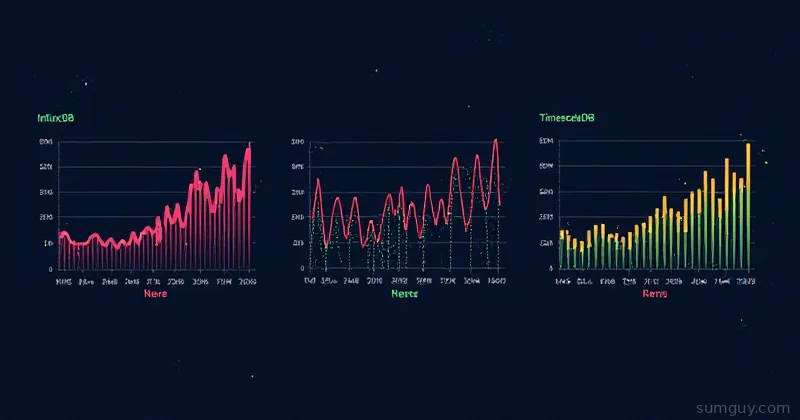
InfluxDB vs TimescaleDB vs VictoriaMetrics
Time-series database showdown. Cardinality limits, query language, retention policies, and which engine fits your monitoring stack.
All the articles with the tag "monitoring".
Time-series database showdown. Cardinality limits, query language, retention policies, and which engine fits your monitoring stack.

Power monitoring with Shelly EM/Pro/3EM, Home Assistant energy dashboard, circuit-level metering, solar+grid tracking, and wiring sanity checks.

HyperDX (ClickHouse, session replay) vs OpenObserve (Rust, cheap object storage), two modern self-hosted observability platforms compared for homelabbers.

Set up Playwright synthetic monitoring: scheduled headless browser checks, login flow validation, and pass/fail metrics piped into Grafana dashboards.

VictoriaMetrics as a Prometheus drop-in replacement: lower RAM footprint, longer retention, better compression. When the switch actually pays off.
Which 30 Node Exporter metrics matter for Prometheus monitoring. Skip the 200 noisy ones. Textfile collector trick included.

Self-host Grafana OnCall as a free PagerDuty alternative: escalation policies, Alertmanager webhooks, and phone alerts for your home lab (plus the 2026 catch).

Self-hosted Healthchecks.io for cron monitoring with dead-man-switch alerting, Docker setup, and backup integration. Never miss a silent failure again.

Vector vs Fluent Bit log shippers: Rust-based transforms and sinks vs lightweight C agent. Config, VRL, footprint, and when each wins.

Prometheus pull metrics are great until they aren't. When batch jobs, NAT, and ephemeral containers break scraping, Pushgateway, PushProx, and alternatives explained.
Blackbox exporter Prometheus probes HTTP TCP DNS ICMP synthetic monitoring without paying for Pingdom or SaaS uptime tools

Error budgets work on a home lab too. What an SLI and SLO actually are, picking an availability target you can hit, 28-day windows, and burn-rate alerts.